


Heaven’s
clarion call to “come out of her, My people!” is being heeded all over the
world by sincere believers. The call is clear. Remaining in Babylon and going to Heaven are
mutually exclusive. Only those who come out of Babylon will be saved.
 |
|
Many who have heeded the call to “Come out of |
The
importance of this issue has led many honest-hearted believers to question:
What is Babylon? Am I still in Babylon if I use money and the
banking system? Am I still in Babylon if
I have a state-issued driver’s license, a business permit, or a title? Is it wrong to sign a will or other legal
document?
All
of these are legitimate questions and Scripture has the answers.
One
of the most unusual prayers ever recorded in Scripture offers a clue. Yahushua prayed the prayer and in it made a
rather startling request: “I do not pray that You should take them out of the
world, but that You should keep them from the evil one. They are not of the world, just as I am not
of the world.” (John 17:15, 16, NKJV)
Yahushua
prayed this the evening He was betrayed in Gethsemane. He knew that His time with the disciples was
drawing to a close. After His death and
resurrection, He would soon return to Heaven, leaving His followers as “sheep
without a shepherd.” Even knowing how
alone His followers would feel, Yahushua did not pray that they be taken back
to Heaven at the same time He went.
Rather, His prayer was that, even though they were still to remain in
the world, they would be preserved from the power of Satan.
It
is a difficult thing to keep in balance: being IN the world, but not OF the
world. It is a very easy thing to veer
to one extreme or the other, to drive into the ditch on the right hand, or the
left. However, what is much more
difficult is to maintain the wisdom of balance, right in the middle of the
road.
This
was one of the reasons Yahushua was rejected by the Israelites of His day: He
maintained a balance. He was too
conservative for the Sadducees yet too liberal for the Pharisees. A person, such as a Pharisee, who tries to
earn his salvation by the works he performs, is threatened by such a balance. Likewise, a person who believes it was all
done at the cross and the law need no longer be kept will look with disfavor on
anyone who does keep the law.
This
delicate balance, of being in the
world, but not of the world, is an
important one to understand for all believers.
In keeping this balance, it is very important to remember the Bible’s
definition of Babylon because often the misunderstanding over what makes up
Babylon is the reason why people are confused.
Revelation
17 provides the clearest definition of Babylon:
I saw a woman sitting
on a scarlet beast . . . The woman was arrayed in purple and scarlet, and
adorned with gold and precious stones and pearls, having in her hand a golden
cup full of abominations and the filthiness of her fornication.
And on her forehead a
name was written:
MYSTERY,
BABYLON THE GREAT,
THE MOTHER OF HARLOTS
AND OF THE ABOMINATIONS OF
THE EARTH.
And
I saw the woman, drunk with the blood of the saints and with the blood of the
martyrs of . . . [Yahushua]. (Revelation
17:3-6, NKJV)
Elsewhere,
“Babylon” is referred to as “the great city Babylon” (Revelation 18:21). A city and a woman are both Biblical symbols
used to represent ekklesia.1 A
pure woman (as in Revelation 12:1)
represents a pure group of humble believers.
A harlot represents a corrupt ekklesia.
And
a mighty angel took up a stone like a great millstone, and cast it into
the sea, saying,
Thus with violence shall that great city Babylon be
thrown down, and shall be found no more at all.
–Rev 18:21 (KJV)
And there appeared a great wonder in heaven; a woman clothed with the
sun, and the moon under her feet,
and upon her head a crown of twelve
stars.
–Rev 12:1 (KJV)
By
Scriptural definition, then, Babylon is a system of religious beliefs that is
steeped in error, superstition and non-Biblical tradition. To assume that all governmental permit
requirements or worldly monetary systems keep a person in Babylon is to
misunderstand the symbols employed when believers are called to “Come out of
Babylon!”
Does
the divine law dictate that the government has to require you to purchase a
business license in order to run a business?
Does the divine law command the government to issue birth and death
certificates? In other words, according
to the divine law, does the government have the right to demand you obtain the
various legal documents most governments require?
No. There is nothing in the divine law that
states the government has the right to require this.
However,
is there anything in the divine law that says the government can not require you to get a permit . . . or
a title . . . or a license? Is the
divine law being broken if you do get legal documents?
No. Yahuwah’s law does not say you cannot get a
state-issued license or permit. Therefore,
it is not a sin to obtain a business license in order to run a business, or
anything else necessary for living in the modern world. In fact, if a man refuses to obtain a
business license that would support his family, just because the government
does not have a divine right to demand it, and by refusing to obtain it, his
family is thrown into want, he is breaking the larger principle of obligation
to provide for his family.
“But
if anyone does not provide for his own, and especially for those of his
household, he has denied the faith and is worse than an unbeliever.” (1 Timothy 5:8, NKJV)
This
balance was one the Israelites struggled to understand as well. As Heaven’s chosen people, they were very
bitter that politically, they were under dominion to pagan Rome. In one of the Pharisees’ attempts to denounce
Yahushua to the people, this very subject was brought up.
Then the Pharisees
went and plotted how they might entangle Him in His talk. And they sent to Him their disciples with the
Herodians, saying, “Teacher, we know that You are true, and teach the way of .
. . [Elohim] in truth; nor do You regard the person of men. Tell us, therefore, what do You think? Is it lawful to pay taxes to Caesar, or not?”
But . . . [Yahushua]
perceived their wickedness, and said, “Why do you test Me, you hypocrites? Show Me the tax money.” So they brought Him a denarius.
And He said to them,
“Whose image and inscription is this?”
They said to Him,
“Caesar’s.” And He said to them, “Render
therefore to Caesar the things that are Caesar’s, and to . . . [Elohim] the
things that are . . . [Elohim’s.”
(Matthew 22:15-21, NKJV)
The
Pharisees’ question was a trap. If
Yahushua had said, “Yes, pay your taxes to Rome,” they would have denounced Him
to the people who resented paying taxes to their Roman conquerors. On the other hand, if He had said, “No, as
Yah’s chosen people, you should not pay the Roman tax,” they would have
denounced Him to the Romans as a rebel trying to start a revolt (a rather
common occurrence among the Israelites!)
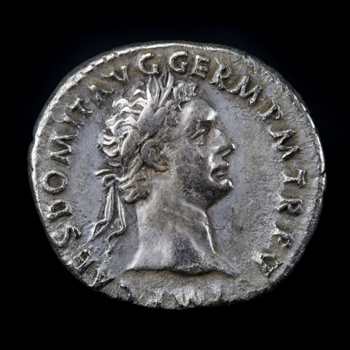 |
|
A denarius with the Roman emperor’s image and |
Yahushua’s
answer resolved this troubling issue for many sincere-minded people who heard
Him that day and it supplies the perfect balance that believers today must
practice as well. There was nothing in
the divine law that was being broken by the Roman tax. Consequently, it was not unlawful to pay the
tax.
In
order to pay the tax, a person had to sell something and turn it into
coin. As demonstrated by Yahushua’s
question, “Whose image and inscription is this?” the money bore the image and
the name of the pagan Roman emperor. Despite
the pagan inscription upon the coin,2 it
was not unlawful to use it – so long as Yahuwah’s law was not broken.
No
one enjoys paying taxes or going to the effort to obtain various
government-required licenses and permits.
As the world draws closer and closer to total dominance by a small,
power-hungry elite, the wickedness in high places is increasing at ever
escalating speeds. Nevertheless, if the
laws or customs of man do not break the law of Yahuwah, then there is no sin in
complying with the laws of man or in using money to supply one’s needs or pay
one’s debts.
An
example of the balanced approach Yahushua took to money and the laws imposed by
earthly rulers, is found in Matthew 17.
Because the tribe of Levi was the priestly class, they were not given an
inheritance of land, like the other tribes received. The tithes and offerings of the people were
to support their spiritual leaders. For
this purpose, a “temple tax” was required of every adult.
The
exceptions to this tax, of course, were the spiritual leaders themselves. Kings, priests, Levites, prophets or anyone
considered a “messiah” (an “anointed one”) were exempted from paying the temple
tax.
One
day, “those who received the temple tax came to Peter and said, ‘Does your
Teacher not pay the temple tax?’ ” (Matthew 17:24, NKJV).
The
implied criticism was not lost on Peter.
Yahushua was not a law-breaker!
Peter quickly leaped to Yahushua’s defense: “He said, ‘Yes.’ ” (Verse
25)
But
Peter did not see the trap he had just blundered right into. The Saviour was known throughout Israel as a
great “Rabbi.” Nicodemus, a respected
member of the Sanhedrin, had sought Him out for counsel.3 Even His enemies had to concede, “Never man
spake like this man.” (John 7:46,
KJV) As the Messiah (Anointed One) and the Son of Yahuwah, Yahushua was not
required to pay the temple tax!
To
the great satisfaction of the Saviour’s enemies, Peter had as much as admitted
that Yahushua was not the Messiah. Yahushua
was aware of what had happened. He did
not indignantly defend His position as the Messiah and a rabbi who did not need
to pay the tax. Gently Yahushua enlightened
His loyal follower as to the real intent behind the tax collector’s question.
And when he had come
into the house, . . . [Yahushua] anticipated him, saying, “what do you think,
Simon? From whom do the kings of the
earth take customs or taxes, from their own sons or from strangers?”
Peter said to Him,
“From strangers.”
. . . [Yahushua] said
to him, “Then the sons are free.”
(Matthew 17:25 and 26, NKJV)
Precious
Saviour! So kind, so patient and
polite. So careful to never cause
embarrassment or reproach. As the Son of
the Monarch of the Universe, the King of kings, Yahushua was exempt from paying
the temple tax but He did not reproach Peter.
And then the story gets even more interesting, for Yahushua’s very next
words were:
“Nevertheless, lest
we offend them, go to the sea, cast in a hook, and take the fish that comes up
first. And when you have opened its
mouth, you will find a piece of money; take that and give it to them for Me and
you.” (Matthew 17:27)
“Lest
we offend them.” As the Lamb of Yah, the Son of the Highest, the law does not require
that I pay tax. However, lest we offend
them, go and pay it for us both.
 |
|
“Babylon” is a system of false religion. If it were a sin to use the common system of |
The
lesson taught in the most polite way possible, Yahuwah then worked a miracle to
confirm Yahushua’s status as the Messiah and the Son of Yah. Peter caught a fish and there was a coin in
its mouth – a coin worth enough money that it was sufficient to pay for both
Yahushua’s tax and Peter’s!
The
lesson Yahushua taught by word and example is, if human laws or requirements do
not break the law of Yahuwah it is
acceptable to obey that human law, “lest we offend.” It is not necessary for one to ride a bike everywhere
because it break’s Yahuwah’s law to obtain a state-issued driver’s
license. It is not wrong to purchase a
business license, a marriage license or any other of a host of (unnecessary)
human requirements if these do not actively break the divine law.
It
is not wrong to draw a pay cheque or use banks.
Yahuwah has never outlawed the use of money. “For the Scripture says, ‘You shall not
muzzle an ox while it treads out the grain,’ and, ‘The laborer is worthy of his
wages.’ ” (1 Timothy 5:18, NKJV) The abuse of money and banking by the power
elite will meet its final reward as
described in Revelation 18. Nevertheless, it is not a necessary part of
coming out of Babylon to create hardship for oneself and one’s family by
refusing to engage in the work-a-day world’s money-for-goods-and-services
system.
The apostle Paul also wrote
of the important balance that must be kept by those who must live in the world even though they are not
part of the world.
Let every soul be
subject to the governing authorities.
For there is no authority except from . . . [Yahuwah], and the
authorities that exist are appointed by . . . [Yahuwah]. Therefore whoever resists the authority
resists the ordinance of . . . [Yahuwah], and those who resist will bring
judgment on themselves.
For rulers are not a
terror to good works, but to evil. Do
you want to be unafraid of the authority?
Do what is good, and you will have praise from the same. For he is . . . [Yahuwah’s] minister to you
for good.
But if you do evil,
be afraid; for he does not bear the sword in vain; for he is . . . [Yahuwah’s]
minister, an avenger to execute wrath on him who practices evil.
Therefore you must be
subject, not only because of wrath but also for conscience’ sake. For because of this you also pay taxes, for
they are . . . [Yahuwah’s] ministers attending continually to this very thing.
Render therefore to
all their due: taxes to whom taxes are due, customs to whom customs, fear to
whom fear, honor to whom honor. (Romans
13:1-7, NKJV)
Paul
is saying: do not break human laws simply because they are not included in
Yah’s law. Keep the government’s rules
and laws so that the truth will not be ill-spoken of by unbelievers.
 |
|
Human laws are to be kept and observed as long as they do |
Paul’s
admonishment should not be understood to mean that if a human law breaks the
divine law, that human law must still be kept.
On the contrary, Paul clearly states that all are to “do what is good”
because the rulers receive their authority from Yahuwah. If a ruler oversteps his divinely ordained
authority and makes a decree that would break the divine law, all are under
obligation to their Maker to keep the divine law, even if it means breaking the
human law.
This
is precisely the situation Daniel found himself in when King Darius was tricked
into passing a law that no one should pray to any god (accept the King) for 30
days. To break the law meant death in
the lions’ den.
Daniel believed that Yahuwah, the Creator of the heavens
and the earth, “removes kings and raises up kings.” (Daniel 2:21)
Years before, Daniel had been taken a prisoner by King Nebuchadnezzar. Stolen from his home and family, made into a
eunuch at the king’s command, faithful Daniel could nevertheless tell
Nebuchadnezzar:
You,
O king, are a king of kings. For the . .
. [Elohim] of heaven has given you a kingdom, power, strength, and glory; and
wherever the children of men dwell, or the beasts of the field and the birds of
the heaven, He has given them into your hand, and has made you ruler over them
all. (Daniel 2:37-38)
Then Daniel, with knowledge imparted by Heaven, went on
to prophesy of the fall of Babylon and the rise of King Darius’ kingdom. Heaven had placed Nebuchadnezzar on the
throne of Babylon, and Heaven placed Darius on the throne of Medo-Persia. However, when Darius’s law broke Yahuwah’s Law,
Daniel did not obey Darius’ law. He
broke the king’s law in order to keep the Law of the King of kings.
Such is the duty of every obedient child of Yahuwah. The laws of man are to be kept “lest we
offend” until and unless they break the divine law. Human laws that break the divine law overstep
the authority Yahuwah has given them. At
that point, it is the duty of every child of Yah to obey the divine law, be the
cost what it may. This is the balance
necessary for all who must be in the
world even though they are not of the
world.
1
Please see Revelation 11:2 for an
example of “city” being used as a symbol for an ekklesia, or the body of
believers.
But the court which is without the temple leave out, and measure
it not;
for it is given unto the Gentiles: and the holy city
shall they tread under foot forty and two months.
–Revelation 11:2 (KJV)
2
Sometimes inscriptions themselves were pagan mottos, such as Constantine the
Great’s Sol Invictus, or Invinsible
Sun inscription.
3
See John 3.

Comments